
Air Supply & Setup · Buyer’s Guide
What Size Air Compressor Do You Need For A Pneumatic Jackhammer?
Start with the exact tool’s airflow and pressure, then account for the complete air system.
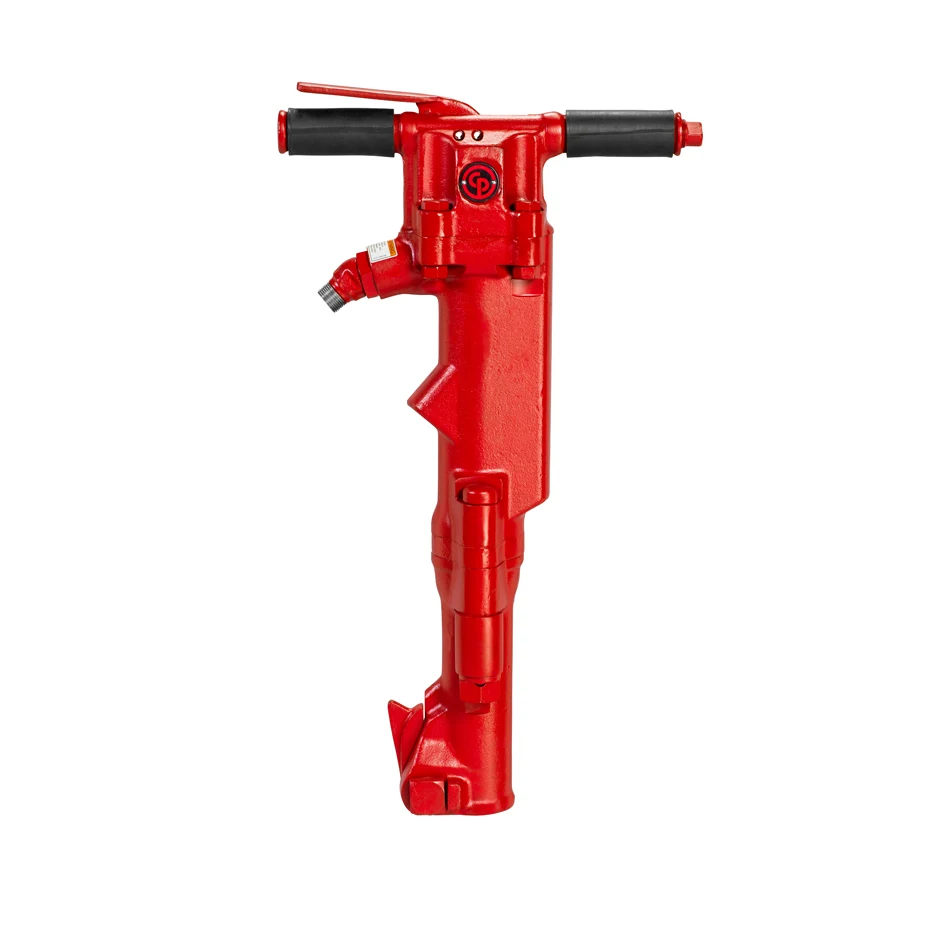
A compressor rating is only part of the information you need when planning an air-powered hammer. The tool, the hose run and any other equipment using that air all belong in the same discussion.
Gather the compressor nameplate details and the model numbers of the tools you expect to run. We will walk through how to read those ratings, what to record about the connections and what to include when asking about the complete setup.
The Short Answer
Choose a compressor by its delivered airflow at the required working pressure, matched to the exact tools that will run together. There is no single compressor size for every jackhammer. Check hose, fitting and duty-cycle requirements as part of the same decision.
CFM And PSI Answer Different Questions
CFM describes airflow; PSI describes pressure. Compare the tool’s specified air demand with the compressor’s delivered capacity at the required pressure. A high maximum pressure or a large tank alone does not show that a compressor can supply a hammer continuously.
Use the exact manufacturer specifications. General air-tool charts may use different assumptions for intermittent operation. Do not substitute an automotive air-hammer average for the requirements of a construction chipper or paving breaker.
Read The Tool Rating Before Choosing A Compressor
Record the tool model, rated air consumption, required pressure and minimum hose information. Check whether an airflow figure is stated at load, as an average, or under another specified condition. If the basis is unclear, ask the supplier before comparing it with the compressor rating.
For example, Ingersoll Rand lists the PB35AL8 at 49 CFM at load and the PB50AL1 at 58 CFM at load. These are requirements for those particular models, not a general sizing rule for every breaker.
Add The Demand Of Tools Running Together
List each tool and the number expected to operate simultaneously. As an arithmetic example, two tools specified at 50 CFM each represent 100 CFM of combined stated demand. That sum is a starting input, not a complete compressor recommendation.
Have the air-system supplier account for the actual duty cycle, leakage, other equipment and necessary capacity allowance. Keep the calculation tied to matching pressure and rating conditions rather than adding unlike figures.

Review The Hose And Fittings
Pressure can be lost between the compressor and the tool. Hose length, inside diameter, couplers and other components affect the delivered air supply. Record the full run, including any whip hose, filters and lubricators.
Ask for the tool-end supply to be checked under the operating conditions specified by the manufacturer. Do not compensate for an uncertain setup by exceeding the tool’s rated pressure. The connection and lubrication instructions should come from the exact model’s manual.
Send A Complete Air-Supply Brief
When requesting a tool or hose quote, include the compressor make and model, its delivered airflow rating and pressure, the hammer model and quantity, hose inside diameter and length, and the connections you already own.
Mention whether equipment will run together and describe the working environment. A clear photo of the compressor rating plate and hose-end fittings can help identify what needs to be checked. This gives the supplier a useful starting point for selecting the complete setup.
Your Comparison Checklist
| Item | Information to Provide |
|---|---|
| Tool demand | Exact models, CFM or equivalent units, and required pressure |
| Compressor | Make/model and delivered airflow at the relevant pressure |
| Simultaneous use | How many tools and what else uses the air supply |
| Hose run | Inside diameter, total length and whip hose |
| Connections | Couplers, adapters, filters and lubricators |
Common Questions
Will A 185 CFM Compressor Run My Jackhammer?
The rating alone is not enough to confirm the setup. Compare delivered capacity at the required pressure with the exact tool demand, simultaneous use and air-system requirements.
Can A Bigger Tank Make Up For Too Little Airflow?
A tank provides stored air, but it does not increase the compressor’s sustained delivery. Check the delivered airflow and operating duty for the intended use.
Does A Longer Hose Change The Setup?
Yes. Include total length and inside diameter when reviewing pressure loss and the manufacturer’s hose requirements. The fittings and other components also need to be considered.
References & Further Reading
- Ingersoll Rand: PB Series Model Specifications
- Atlas Copco: Air-Tool Installation Pocket Guide (PDF)
- Mi-T-M: Air Estimating Guide and Rating Assumptions (PDF)
- Atlas Copco: Calculating Compressed-Air Requirements
Use the current manual for your exact model for operating, safety and maintenance instructions.
